Engaged a 1700+ community for an NFT Marketplace linked 1:1 to real land
Invert is a conserve-to-earn metaverse designed to save the rainforest through land NFTs and innovative technologies. Backed 1:1 by real land, it ensures in-game benefits, earnings, and the funding of conservation for players, NFT enthusiasts, ecologists, and visionaries.
I worked as an end-to-end design lead, launching and validating multiple concepts for the project. I helped define the parameters for user research, recruited interviewees from different fields including conservationists, crypto enthusiasts, and gamers, and conducted user interviews validating our end user. I designed the information architecture and flow of the app, created and validated the final UI designs, and worked alongside the development team to implement them.
Worked directly with: Product Director, Graphic Designer, Visual Designer, Game Designer, Unity Developer, Concept Artist, Crypto Strategist, and Geoscientist.
1,700+
Community
Discord members engaged through research, surveys, and usability testing
3
Personas validated
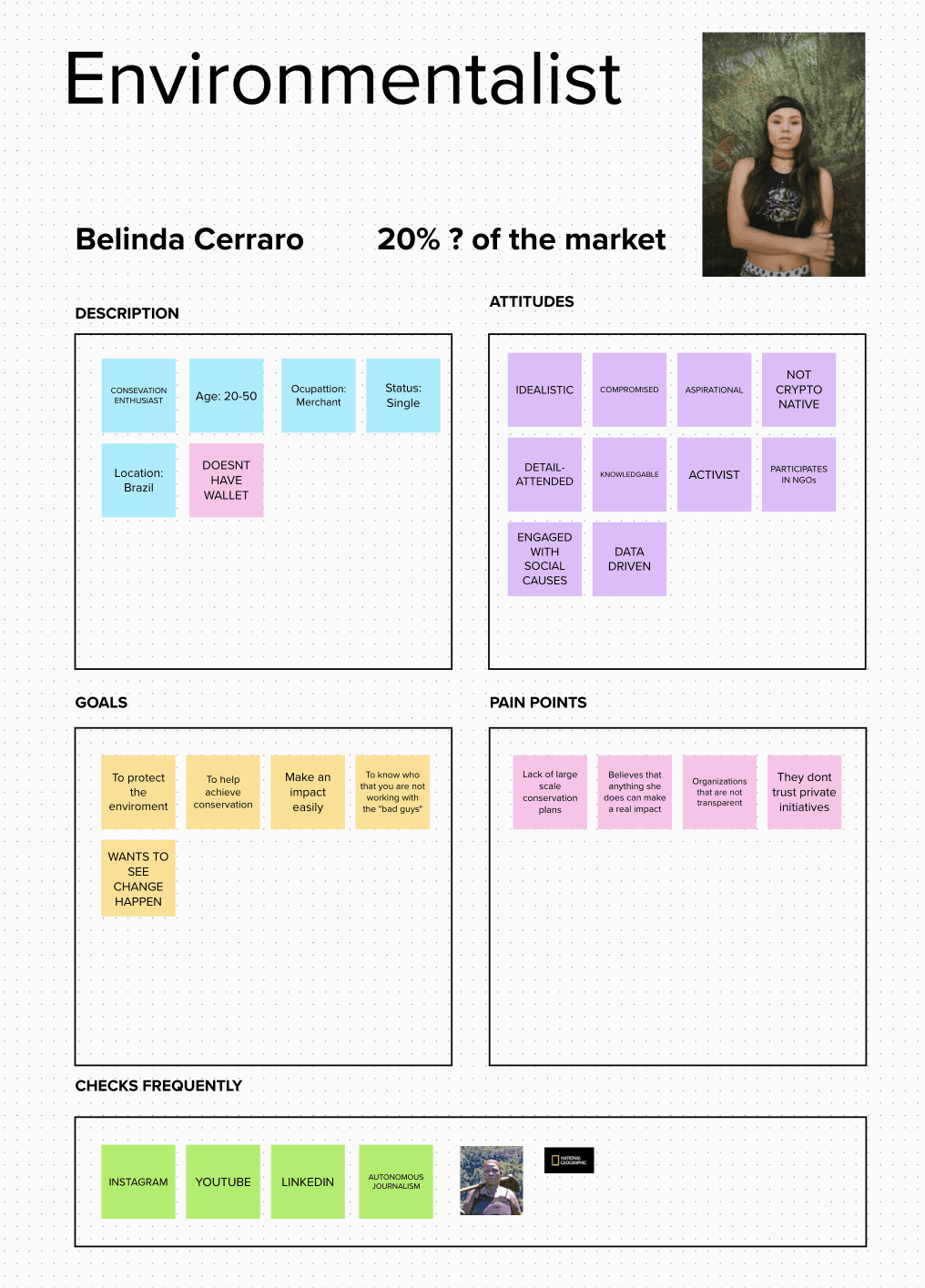
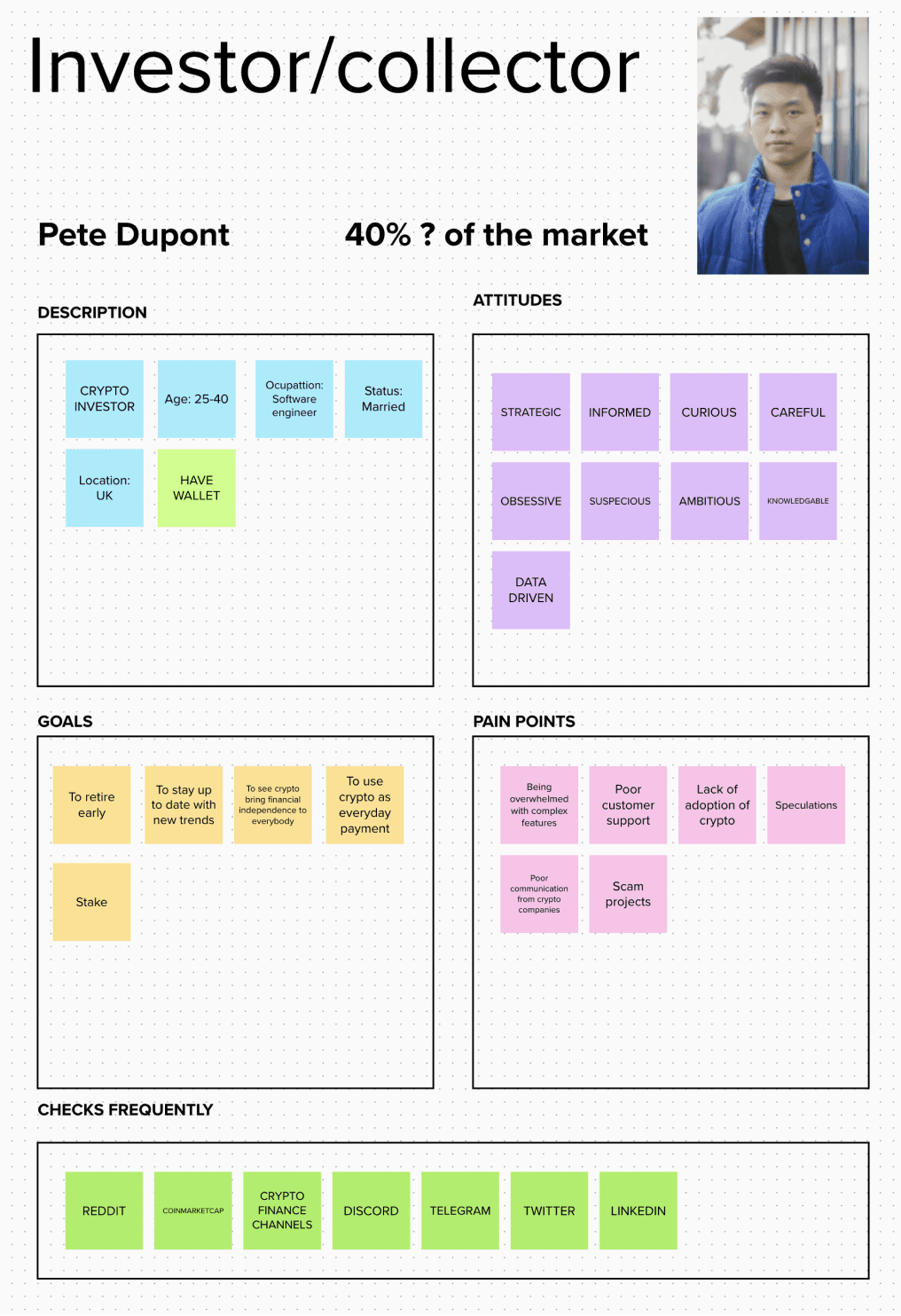
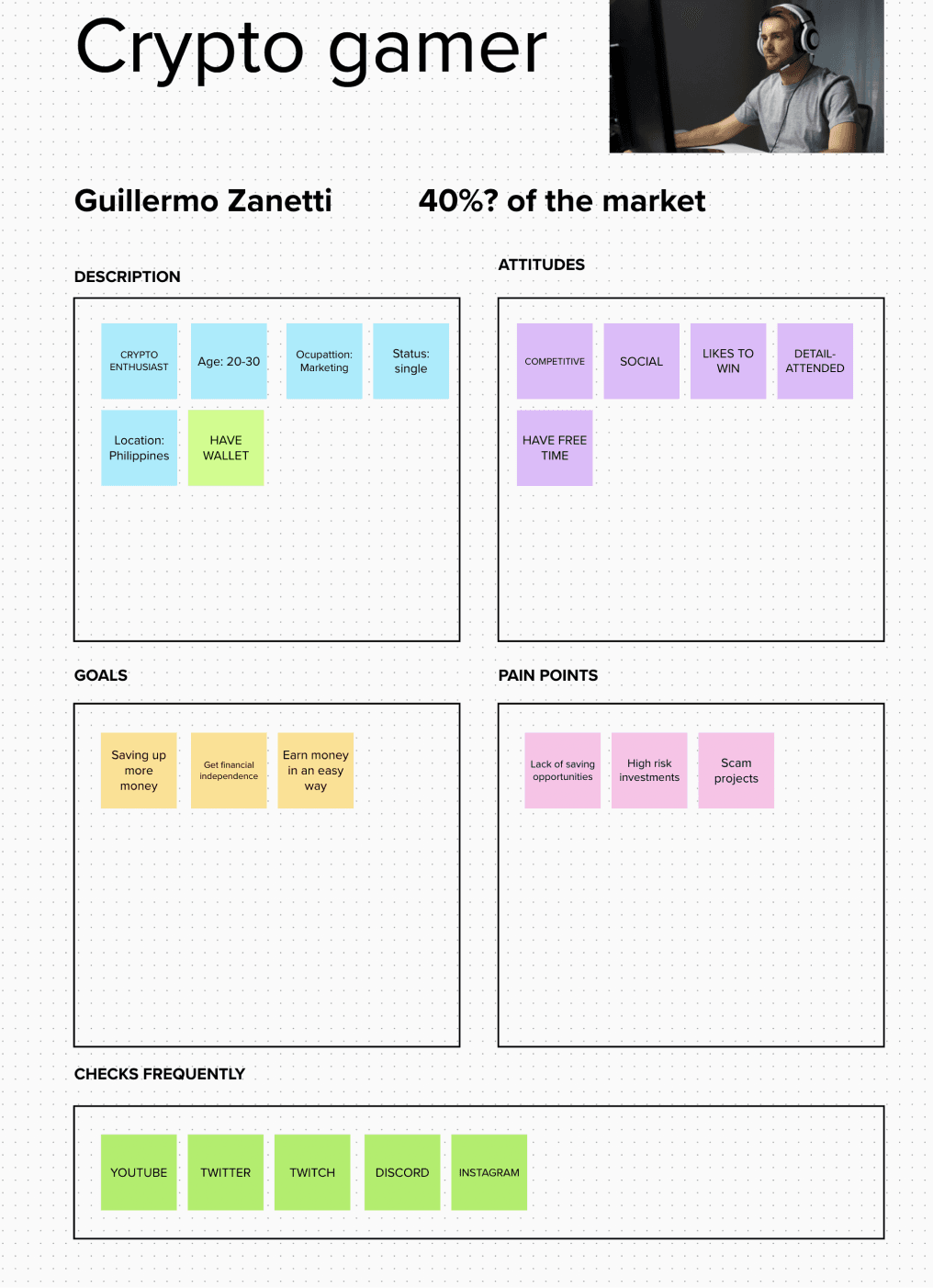
Environmentalist, crypto investor, crypto gamer — 5 interviews each
BSC → Polygon
Blockchain
Caught and corrected mid-project to match conservation values
50%
Conservation funding
Of every NFT purchase routed directly to Invert's public, on-chain conservation wallet
Participating in a Web3 conservation project involves a lot of constant iteration on key concepts from stakeholders, which is translated into modifications of the UX. I managed to stay on track and deliver design solutions through all of these process changes.
Before designing anything, we validated three assumption-personas, environmentalist, crypto investor, and crypto gamer, against real interviews rather than guesswork. Each final persona shaped a different part of the product, from conservation storytelling to marketplace mechanics.
The shipped Land NFT Marketplace across mobile and web, the information architecture behind it, and the Discord giveaway game used to build community ahead of launch.
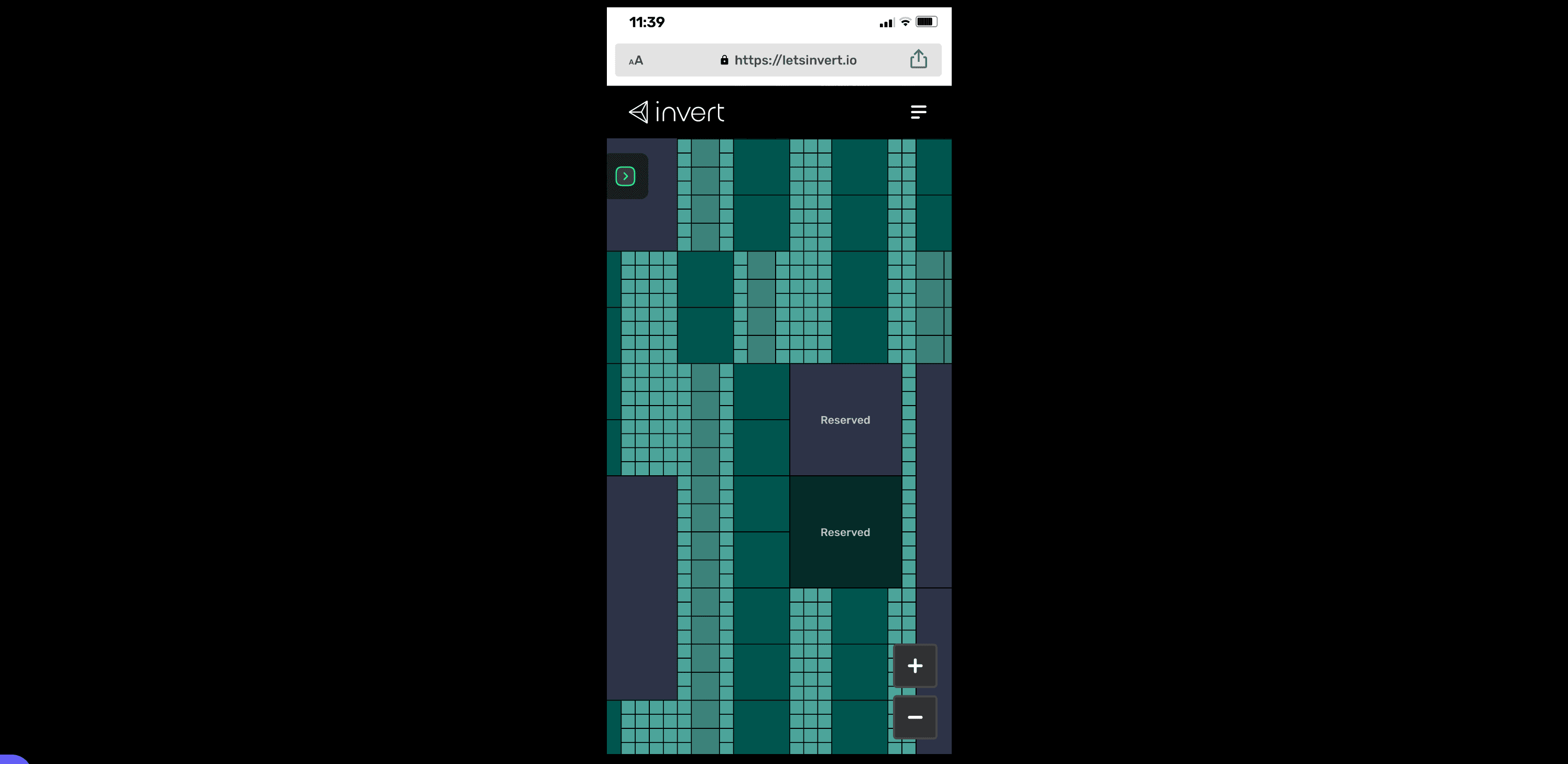
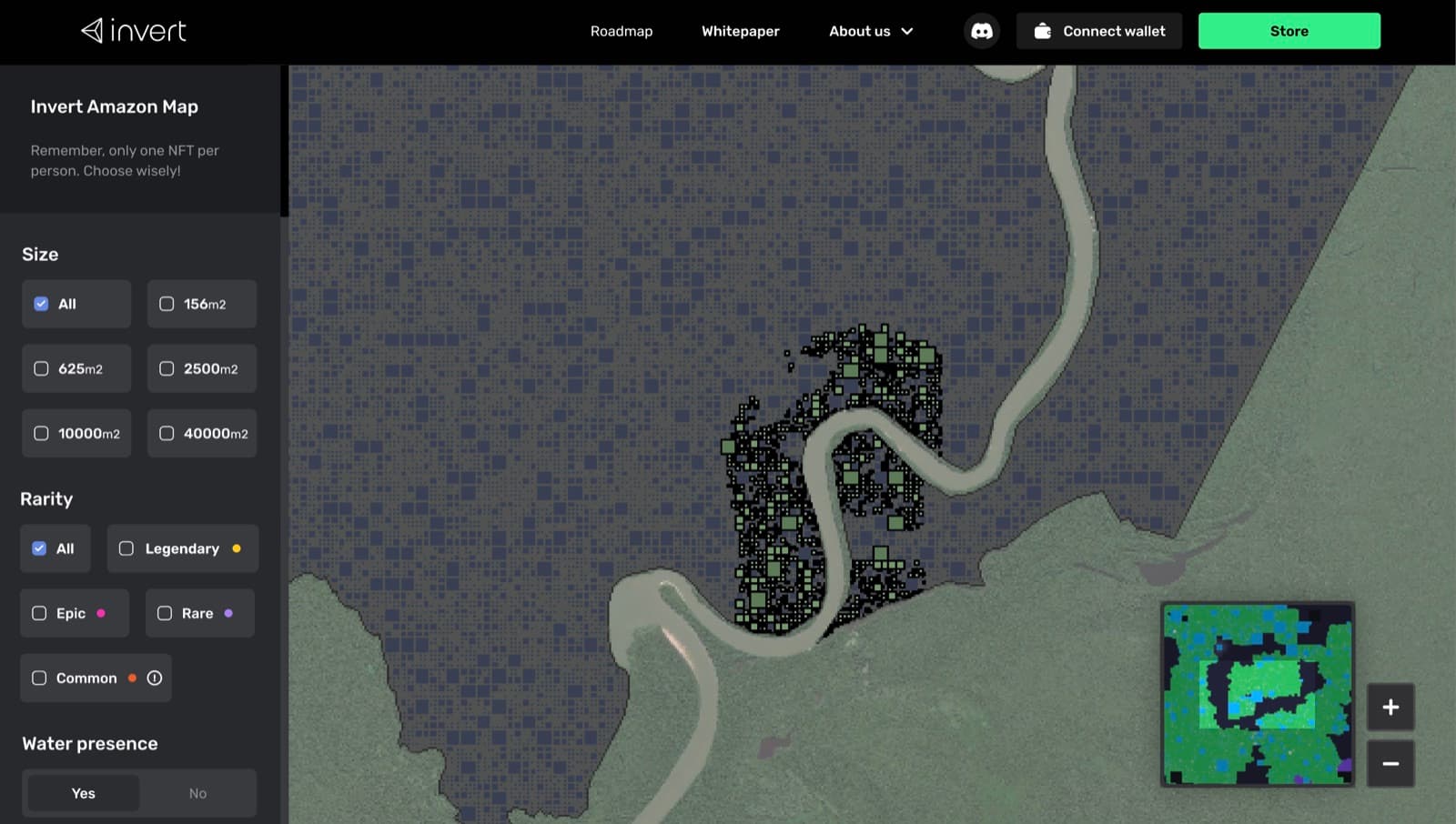
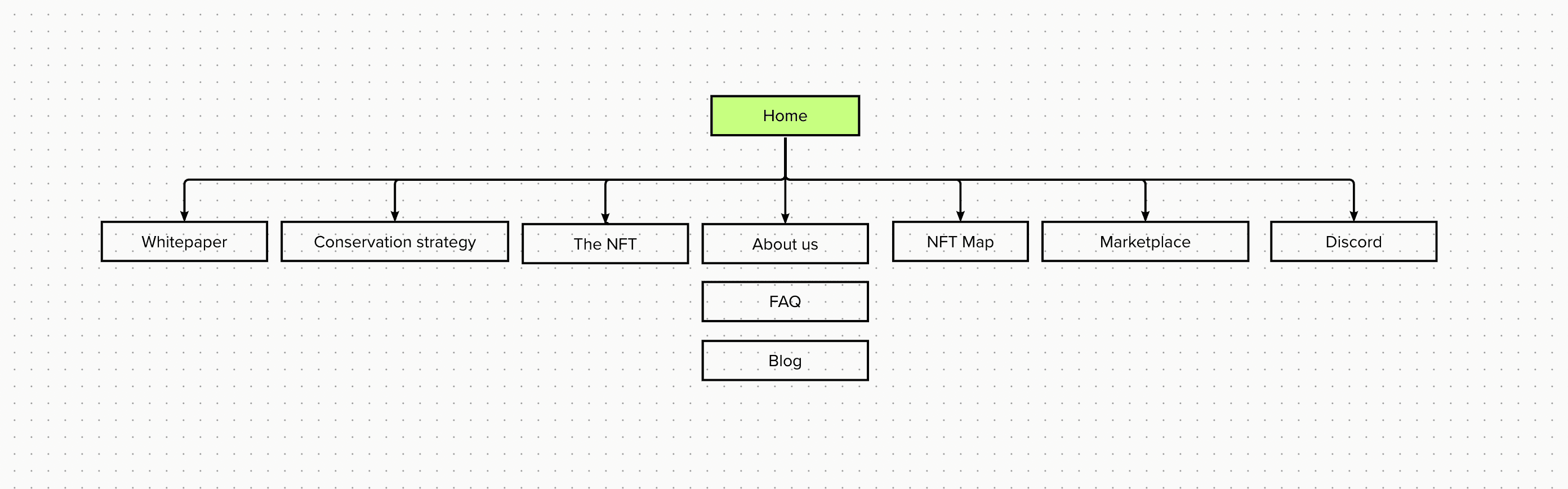
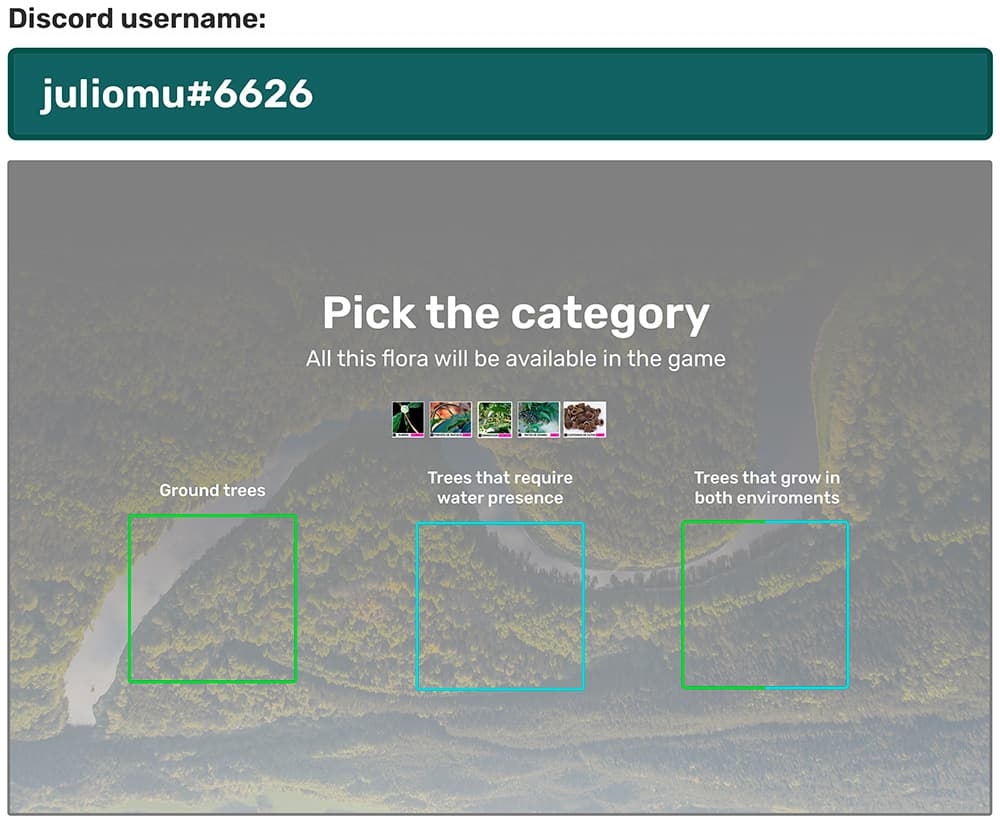
We started research collaboratively with the Product Director, developing assumption-personas for three audiences: environmentalist, crypto investor, and crypto gamer. We recruited 5 users of each type from close circles matching our assumptions, interviewed them (30-45 minutes each, in groups of 2-3 with one interviewer and the rest note-taking), and rewarded each with a $20 gift card. We then developed a carefully worded community survey and shared it with our 1000+ member Discord community, followed by regular moderated usability testing to spot design flaws and iterate weekly. In parallel, I collaborated with a team of sustainability professionals on internal interviews to shape the public conservation strategy, and worked with our geoscientist, a PhD candidate in soil science and international agriculture, to design a digital map of a real Amazon land plot based on Global Forest Watch's API and near real-time monitoring, tied to real conservation partners on the ground in the Amazon. Early in the project we also spotted that our original blockchain choice didn't match Invert's conservation values, and worked with the team to move from Binance Smart Chain to Polygon, keeping every NFT's on-chain footprint (0.0003 kWh per transaction, versus 62.5 kWh on Ethereum) consistent with the product's conservation mission. To build community ahead of launch, I designed a Discord giveaway game: participants filled in a board with real flora species from the forest for a chance to win a gift card, with a fallback path, a short interview, for anyone who wanted to participate without getting every answer right, which doubled as a lightweight user-research channel. Alongside our visual designer, I also grew the atomic design system to cover full component states, buttons, toggles, checkboxes, wallet-connect flows for MetaMask, Binance, and Trust Wallet, and NFT rarity tiers, keeping implementation consistent as the product scaled.
The goal was to design a land-NFT marketplace and conservation experience that felt trustworthy to three very different audiences at once, while keeping conservation, blockchain, and business goals articulated together rather than working against each other.
Engaged and grew a 1700+ member community, validated end users across three personas, and shipped a full land-NFT marketplace for mobile and web alongside a growing atomic design system covering wallet-connect flows, component states, and NFT rarity tiers.
A cross-functional team, including sustainability experts, our geoscientist, and our crypto strategist, validated direction through internal interviews and a competitor analysis benchmarking comparable land-conservation and Web3 projects' home, roadmap, and NFT product pages. Design QA sessions with the development team kept builds pixel-perfect against the design system.
Working on a fast-moving Web3 and conservation project meant constant iteration on core concepts translating directly into UX changes. I stayed on track by tightly looping community feedback, surveys, interviews, and usability tests, into design decisions rather than treating research as a one-time phase.
 Mayorga